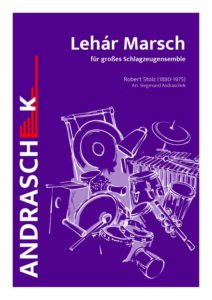
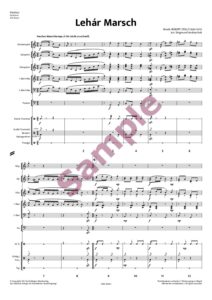
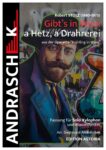
Lehàr Marsch für Schlagzeugensemble
39,00 €
incl. VAT
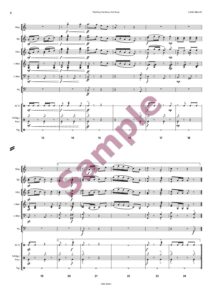
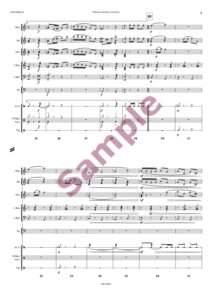
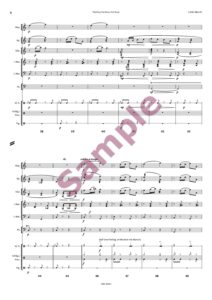
A sensational discovery at the Vienna Library! Rating: Highly recommended! Version for percussion ensemble. A nice change from the orchestral version.
Robert Stolz (1880–1975) hardly needs an introduction. He was a successful composer and conductor from Graz. Among the highlights of his career were two Oscar nominations. His extensive body of work has still not been fully explored. Many of his melodies, however, remain unforgettable to this day, and his work as a conductor—especially in the genre of Viennese music—has been immortalized on countless recordings. What made his work so special was succinctly captured by Marcel Prawy as follows: “Unlike Johann Strauss II or Franz Lehár, Stolz is a composer whose music can withstand any arrangement, capable, as it were, of wearing any suit: his music sounds magnificent whether performed by a philharmonic orchestra, sung by a world-class tenor or a jazz singer, or played by a band, a guitar, a zither, or solo piano. The importance of arrangement makes this man from Graz the American among the masters of European music.”
Lehár-Marsch RSWV 20 (Op. 43)
The handwritten score of the Lehár March (1907) comes from the archives of the Doblinger music publishing house (today: the Vienna Library in City Hall). A comparison with the score of the operetta “Der Minenkönig” suggests that Stolz orchestrated it himself. The (handwritten) score bears the inscription: “Dedicated with the utmost admiration to my dear friend, the brilliant composer Franz Lehár [!].” However, this was not printed in the commercial edition at the time; instead—as was customary—only a conductor’s part was produced. The trio proves to be a particularly sophisticated musical touch: the composer specifies cup mutes for the two melody-carrying trumpets, creating a timbre that is unusual for the march genre. There are numerous performance notes in the score, which are described in detail in my dissertation: ROBERT STOLZ (1880–1975) Instrumentation and Arrangement in the Production Process of His Music.
This arrangement was commissioned in 2013 by “STUDIO PERCUSSION graz” and arranged for a large percussion ensemble. In 2026, the arrangement was revised, and the score may now be printed with the kind permission of Doblinger/Wise Music Group. Special thanks go to Dr. Wolfgang Stanicek for this. May this interesting and nearly forgotten work by Robert Stolz find its way back into the concert programs of renowned ensembles and orchestras.
| Number of instrumentsHier können Sie filtern, ob Sie Literatur für 1, 2 oder mehr gleiche Instrumente suchen. | 5+ |
|---|---|
| InstrumentHier selektieren Sie das Instrument, für das Sie Literatur suchen. | Schlagwerk |
| CuisineHier können Sie nach Genre filtern, ebenso grob auswählen, ob Sie österreichische oder internationale Literatur suchen. | Austrian cuisineDieser Filter zeigt alle Werke an, deren Urheber:innen aus Österreich stammen. |
| CountryLand, aus dem der/die Komponist/in oder das Traditional stammt. | Austria |
| Recommended playing levelSpielniveau von 1 Anfänger bis 6 Profi. | 3-4 |
| LengthHier können SIe eine Mindestzeit oder ein Zeitlimit definieren, das das Werk erfüllen muss. | up to 3 minutes |
| EpochHier können Sie nach musikhistorischer Einteilung filtern. | Viennese music |
| Master chefWerke großer Komponisten | Robert Stolz |
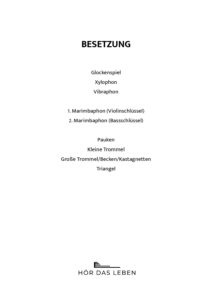
| Included in downloadPartitur und Einzelstimmen, die in der Ausgabe enthalten sind. | Score, See product description for individual parts |